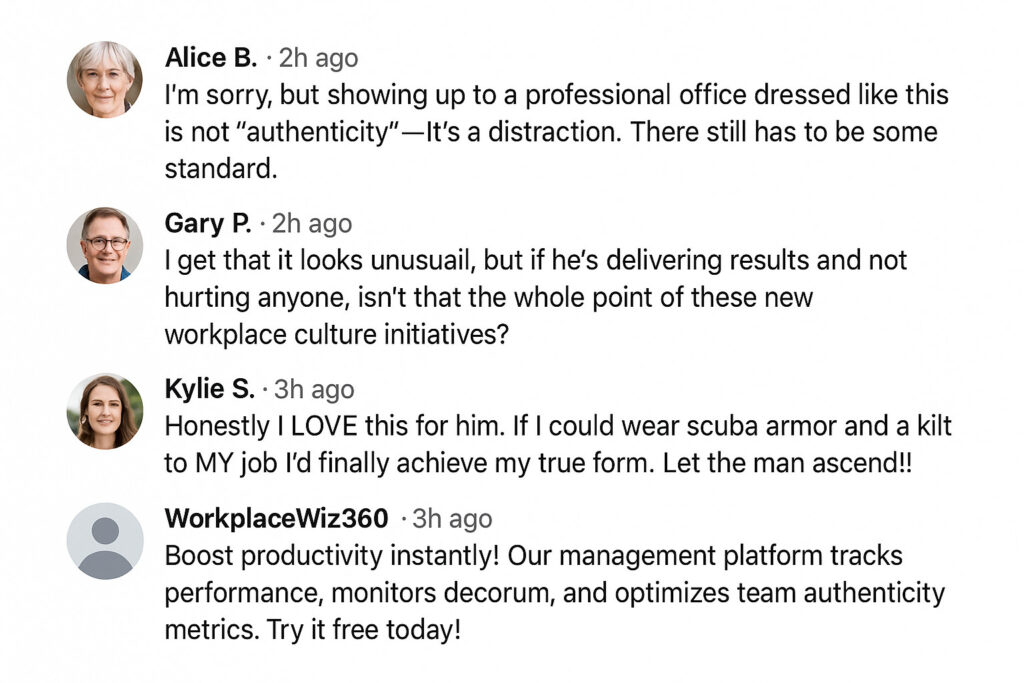
In today’s increasingly competitive business environment, maintaining high standards of workplace decorum remains essential to sustaining organizational performance and preserving public trust. Leaders across industries consistently emphasize that professional conduct, consistent presentation, and adherence to operational norms form the backbone of a productive workforce. These expectations ensure that employees can collaborate effectively, clients receive reliable service, and the company’s long-standing reputation for excellence remains intact.
At the same time, forward-looking organizations are recognizing that employee authenticity can serve as a differentiating brand driver in a crowded marketplace. Studies indicate that teams empowered to express their individuality—within reasonable boundaries—show measurable increases in engagement, discretionary effort, and cross-functional collaboration. In line with this research, the company has recently reaffirmed its commitment to fostering an inclusive culture that balances performance expectations with personal expression.
This dual commitment was highlighted earlier this week by the presence of Senior Administrative Associate Jacob Renwick, whose eclectic attire drew attention while he executed his day-to-day responsibilities with consistent accuracy and professionalism. While Renwick’s combination of SCUBA gear, kilt, medieval chest plate, feathered wing accessory, and beverage-dispensing headgear may initially appear unconventional in a traditional office setting, supervisors report that his output remains fully aligned with departmental requirements and quarterly objectives.
“Jacob’s performance metrics remain strong, and his attention to detail has not been impacted in any way,” noted a spokesperson from Human Resources. “In fact, his confidence and enthusiasm since adopting his authentic-self attire have contributed positively to team morale.”
Company leadership maintains that workplace decorum and authentic expression need not be in conflict. By upholding clear behavioral expectations while allowing space for individuality, the organization continues to drive productivity, enhance cultural cohesion, and deliver sustained shareholder value.