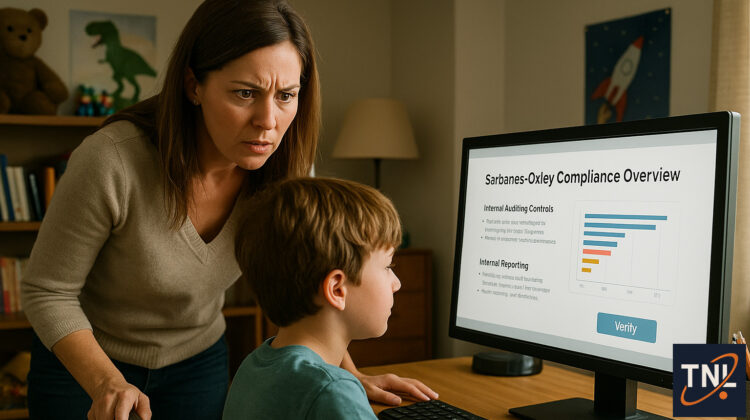
Parents today face challenges previous generations could never have imagined: constant connectivity, digital distractions, and now the growing threat of children independently researching federal corporate governance law. According to experts, the discovery that your child has been googling Sarbanes–Oxley compliance can be startling — but it’s important to stay calm.
Start by remembering: curiosity is normal. Many children experiment with search terms like “audit controls,” “internal reporting systems,” or even “whistleblower protections.” They may have a friend whose parents work in finance. They may have stumbled onto a YouTube video titled “The Top 10 Financial Oversight Failures” while trying to watch people play Minecraft. The important thing is not to shame them.
Instead, open a conversation. Ask gentle, non-judgmental questions like, “What made you curious about corporate transparency legislation?” or “Is someone at school pressuring you to learn about internal control structures?” Avoid accusatory language such as “Where are you learning about Section 404?” which can cause defensiveness.
Monitor for behavioral changes. Children engaged in early-stage compliance exploration may begin labeling household storage bins, correcting inconsistencies in chore logs, or insisting that siblings maintain proper documentation before borrowing toys. These are signs they may be seeking control in other areas of life — or that they’ve been exposed to case studies involving Enron.
If your child continues to show interest, consider channeling it in healthy directions. Many families find it helpful to introduce age-appropriate alternatives such as “basic budgeting,” “civics,” or “maintaining eye contact during conversations.” In extreme situations, some institutions offer teen-friendly seminars on “Understanding Rules Without Fixating on Them.”
Most importantly, reassure your child that they are safe, loved, and not responsible for ensuring financial accuracy in publicly traded companies.
With patience and support, your child can move past this phase — and eventually return to perfectly normal online activities, like googling whether quicksand is still a thing.